



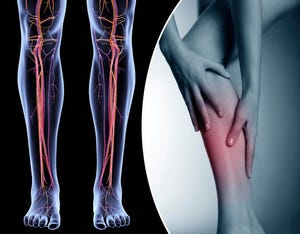




The short answer
Compression socks should not be worn by people with severe peripheral artery disease, untreated or decompensated heart failure, an active skin infection or weeping wound on the leg, a confirmed allergy to the sock fabric, or numbness severe enough that they cannot feel a sock digging in. Everyone else is usually a candidate, though several groups should get sized and cleared by a clinician first.
If your legs ache, itch, cramp, bruise or swell in compression socks, the sock itself is rarely the villain. In most cases it is the wrong size, the wrong pressure, a wrinkled application, or a sock that has been washed past its stretch life.
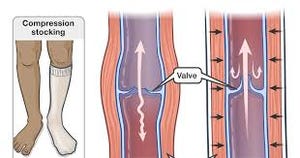
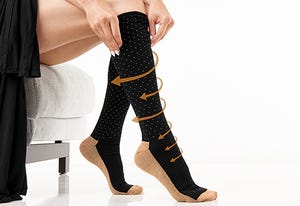
Compression works by squeezing the leg hardest at the ankle and easing off as it climbs, which nudges blood and lymph fluid back toward the heart instead of letting it pool around your feet. That is a genuinely good idea for tired legs, varicose veins, long flights, twelve-hour shifts and pregnancy. But squeezing a leg is a medical act, and a medical act has people it does not suit.
This guide covers the hard stops, the "ask first" cases, and the side effects that send people back to the search bar — aching, itching, bruising, cramping, knee pain and swelling — with a fix for each.
Who should not wear compression socks: the hard stops
These are the situations where compression is either off the table or strictly a physician's call. The common thread is simple: compression pushes fluid out of the leg, and it needs healthy arteries, healthy skin and a heart that can handle the returning volume.
Skip compression until a clinician says otherwise
- Severe peripheral artery disease (PAD). PAD narrows the arteries feeding your legs. Adding external pressure to an already starved limb can reduce blood supply further. Vascular guidelines treat severe disease — roughly an ankle-brachial index below 0.5 — as a contraindication, while mild to moderate PAD may still allow low-pressure garments under supervision.
- Decompensated or untreated heart failure. Compression moves fluid from the legs back into central circulation. If the heart cannot clear that extra volume, it can back up into the lungs. Stable, well-managed heart failure is a different conversation — have it with your cardiologist.
- Active skin infection, cellulitis, or a weeping wound. A snug sock over inflamed or oozing skin traps moisture and bacteria. Treat the infection first, then return to compression as part of healing.
- Confirmed allergy to the sock materials. True contact allergy to latex, spandex, elastane or textile dyes causes a spreading rash, not just a bit of dryness. Latex-free and dye-free options exist, but the reaction needs identifying first.
- Severe sensory neuropathy. If you cannot feel pressure or pain in your feet, you cannot feel a sock cutting in. That combination is how a fit problem becomes a pressure sore. People with diabetes-related neuropathy need a fitter and a provider, not a guess at a size.
- Sudden, painful swelling in one leg. A hot, red, tender calf that swelled overnight needs assessment for a clot before anything is pulled over it. Compression is part of DVT care, but only after a diagnosis.
Also on the list: legs with a shape no standard sock can follow — deep skin folds, severe deformity, or a limb far outside the manufacturer's measurement chart. These need custom garments, not off-the-shelf ones.
Suggested internal link targets: "Compression Socks and PAD: What the ABI Number Means" · "Compression Socks for Diabetics: A Fitting Guide" · "Compression After a DVT Diagnosis"
Get cleared and measured first
- Fragile or thin skin, including skin thinned by long-term steroid use or age. Donning friction can tear it. Use donning gloves and softer knits.
- Existing dermatitis, eczema or psoriasis on the leg. Compression can help venous eczema and irritate other kinds. Which one you have matters.
- Rheumatoid arthritis or hand weakness. Not a medical contraindication — a practical one. A sock you cannot get on straight is a sock that will hurt you.
- Unexplained swelling of unknown cause. Compression treats the symptom and can mask the diagnosis. Find out why the leg is swelling first.
- Kidney or liver disease with fluid retention. Same principle as heart failure: the fluid has to go somewhere.
Can compression socks be bad for you?
Worn correctly, compression socks are one of the lowest-risk interventions in vascular medicine. Worn incorrectly, they are a tourniquet with a friendly label. The honest answer is that can wearing compression socks be harmful depends almost entirely on three variables: your circulation, your fit, and your wear schedule.
The most common real-world harms are not exotic. They are pressure marks that do not fade, skin tears in fragile legs, fungal irritation from socks worn round the clock, and the slow reversal of the pressure gradient by a sock that has been through a hundred hot washes. None of those are reasons to abandon compression. All of them are reasons to get the details right.
Your symptom, decoded
This is the part most articles skip. Below, each common complaint is matched to its usual cause and its actual fix.
| What you feel | Most likely cause | What to change |
|---|---|---|
| Aching legs | Compression class too high, or size too small | Step down to 15–20 mmHg; re-measure in the morning |
| Itching | Dry skin under the knit, or trapped sweat | Moisturize at night, not before donning; switch to cotton or wool |
| Bruising | A fold or band creating a pressure point on fragile skin | Smooth the fabric; check meds that thin skin or blood |
| Knee pain | Top band sitting on the fibular head or crease | Position two finger-widths below the knee; try thigh-high |
| Cramping | Dehydration, or a sock worn overnight without cause | Hydrate; remove at bedtime unless prescribed |
| Swelling above the sock | Fluid stopping at the top of the garment | Extend coverage with thigh-high or pantyhose; elevate |
Why do my legs ache after wearing compression socks?
Snug is the goal; sore is not. The leading cause of aching legs is a compression class higher than you need. 15–20 mmHg covers most travel, desk work, standing shifts and mild swelling. 30–40 mmHg is therapy-grade and belongs with a diagnosis behind it. Buying stronger because it seems more effective is the single most common self-inflicted mistake in compression.
The second cause is sizing. Compression socks are sized by ankle and calf circumference, not shoe size, and every brand's chart differs. Measure first thing in the morning, before the day's swelling arrives, with your feet flat on the floor. A sock that fits your calf but strangles your ankle has inverted the gradient and is now working against you.
Third is application. Yanking a sock up in one motion leaves wrinkles, and every wrinkle is a doubled band of pressure over one strip of muscle. Roll it inside out to the heel, seat the heel, then ease the fabric up in stages and smooth as you go.
Visualization suggestion: a four-frame photo sequence of correct donning — turn inside out to heel, seat heel, roll up in stages, smooth flat. Shot on a real leg, natural light, no model glamour.
Why do compression socks itch, and how do you stop it?
Itching is the most common reason people quit compression, and it is almost never an allergy. The usual culprit is dryness. A knit that hugs your skin for twelve hours wicks moisture away from the surface, and dry skin itches — a problem more than half of regular medical-stocking wearers report at some point. Venous disease itself also reduces skin nutrition, so the legs that need compression most often start out driest.
How to stop itching from compression socks
- Moisturize at night, not in the morning. A fragrance-free, lipid-replenishing cream applied before bed absorbs overnight. Lotion applied minutes before donning leaves a slick film that traps heat and makes the sock harder to pull on.
- Change the fiber. Cotton and merino wool knits breathe far better than dense synthetics. Moisture-wicking blends suit hot climates and long shifts.
- Wash after every wear. Detergent residue, salt and skin cells build up in the knit and irritate. Use a dedicated compression wash, skip fabric softener — it destroys elastane — and air dry.
- Rule out the real allergy. A rash that spreads beyond the sock line, blisters, or worsens each wear is contact dermatitis, not dryness. Stop, see a dermatologist, and ask about patch testing before trying latex-free alternatives.
Suggested internal link target: "Best Compression Sock Fabrics for Sensitive Skin"
Can compression socks cause bruising?
Faint indentation lines that fade within twenty or thirty minutes are normal and harmless. Actual bruising — purple or red discoloration that develops and lingers — is uncommon and always means something is wrong with the fit. A folded band or an undersized cuff concentrates force onto a narrow strip, and the small vessels underneath give way.
Two risk factors get almost no coverage elsewhere, and they matter. First, medications: anticoagulants, antiplatelet drugs and long-term oral or topical corticosteroids all make bruising easier at pressures that would leave another leg unmarked. Second, a new bruise from an old, reliable pair usually means your leg changed, not the sock. Re-measure.
Can compression socks cause knee pain?
Yes, and the anatomy explains it neatly. The top band of a knee-high sits just below the knee — which is exactly where the common peroneal nerve wraps around the head of the fibula, close to the surface and poorly padded. A band that rides up, rolls, or is simply too tight can press on it, producing aching behind or beside the knee, tingling down the shin, or a vaguely weak, clumsy foot.
The fix is usually placement. The cuff should sit roughly two finger-widths below the knee crease, flat and unrolled, and it should never be folded over to shorten the sock. If your calf is short or full, a knee-high may simply be the wrong length — thigh-highs or wide-calf sizing move the pressure off that spot. Persistent numbness or foot weakness is a stop-and-call-your-provider symptom, not a fit annoyance.
Visualization suggestion: an annotated anatomical illustration of the lower leg marking the common peroneal nerve at the fibular head, overlaid with the correct top-band position two finger-widths below the knee crease.
Can compression socks cause leg cramps?
Rarely, and usually indirectly. Compression is generally used to reduce cramping by improving venous return. When cramps appear after starting compression, look at the surrounding habits before blaming the sock: dehydration, a long day on your feet, electrolyte loss from diuretics, and sleeping in socks that were never meant for overnight wear.
That last one deserves emphasis. Lying flat already gives your legs the elevation that compression provides while upright, so overnight wear adds pressure without adding benefit — unless a clinician has specifically told you to. Nocturnal cramps that start after adopting all-day-and-night compression usually resolve when the socks come off at bedtime.
Can compression socks cause swelling?
They can appear to. A knee-high stops fluid from settling at the ankle, and that fluid has to go somewhere — usually to the next lowest point, which is the top of the sock. A soft ring of puffiness just below the knee at the end of the day is a common and generally harmless side effect of compression doing its job. Extending coverage with compression pantyhose or thigh-highs usually resolves it, as does elevating your legs above heart level for twenty minutes a couple of times a day.
What is not normal: swelling that is worse than before you started, swelling in one leg only, or swelling with pain, warmth or redness. That is a stop signal.
Take them off and call someone
- Numbness, tingling, or pins and needles in the toes
- Toes or feet turning white, blue or dusky
- Pain that worsens through the day instead of easing
- Deep red grooves or indentations that persist after removal
- Blisters, open skin, or a spreading rash
- New one-sided swelling with warmth, redness or calf tenderness
None of these are break-in symptoms. They mean the garment is wrong for your leg, or your leg has something going on that compression will not fix.
Four things the other guides leave out
1. Anti-embolism stockings are not compression socks
White anti-embolism stockings — the ones handed out after surgery — are designed for people lying in bed, and they typically deliver a lower pressure than daytime graduated socks. Wearing them for standing work or travel gives you far less support than you think you are getting. Conversely, walking around in therapy-grade 30–40 mmHg because a hospital sock felt fine is a different mistake in the opposite direction. Different garments, different jobs.
2. Your socks have an expiry date
Elastane degrades. After roughly three to six months of daily wear and washing, a compression sock no longer delivers its rated pressure, and it rarely fails evenly — the ankle usually loosens first, which quietly inverts the gradient. If your once-comfortable pair now feels loose but your legs feel heavier, the sock is finished. Rotating two or three pairs extends the life of all of them.
3. Lymphedema and lipedema often need flat-knit, not circular
The socks most people buy are circular knit: seamless, stretchy, ideal for veins. Limbs with significant lymphedema or lipedema often have skin folds and irregular shapes that circular knits bridge over, cutting into creases and creating tourniquets. Flat-knit garments are built to the limb's actual shape. If a standard sock keeps digging into a fold, the answer is a different construction, not a different size.
4. A sixty-second self-check before you buy
- Can you feel a light touch on the top of both feet?
- Are both feet warm, with normal color?
- Is the skin on your lower legs intact — no open areas, weeping or spreading redness?
- Do you have a diagnosis of PAD, heart failure, or diabetes with nerve involvement?
- Have you measured your ankle and calf circumference this morning?
Any concern from the first four means a conversation with a clinician before you order. A "no" on the fifth means you are guessing at a size — and guessing is where most compression problems begin. The fit finder tool and a trained fitter cost nothing and prevent most of what this article describes.
Visualization suggestion: a short vertical explainer video (45–60 seconds) demonstrating how to measure ankle circumference, calf circumference and leg length with a soft tape. Embed below.
Frequently asked questions
Who should not wear compression socks?
People with severe peripheral artery disease, untreated or decompensated heart failure, active cellulitis or a weeping leg wound, a confirmed allergy to the sock fabric, or severe sensory neuropathy should not wear compression socks without medical clearance. Sudden painful swelling in one leg should be assessed for a clot first.
Can compression socks be bad for you?
For most people, no. Harm comes from the wrong pressure level, the wrong size, folded fabric, round-the-clock wear, or an underlying arterial problem that compression makes worse. Correct any of those and compression is among the safest treatments in vascular care.
Is it safe to sleep in compression socks?
Generally no, unless your provider prescribes overnight wear. Lying flat already relieves the venous pressure that compression counteracts while you are upright, and continuous wear increases skin irritation and fungal risk. Day on, night off.
Why do my legs itch after wearing compression socks?
Usually dry skin. The knit draws moisture from the skin surface over a long day, and venous disease reduces skin hydration to begin with. Moisturize at night with a fragrance-free cream, switch to a cotton or wool knit, and wash the socks after each wear. A spreading rash or blistering points to contact allergy and needs a dermatologist.
How tight should compression socks feel?
Like a firm, even hug from ankle to knee, noticeably snugger at the ankle. You should be able to slide a finger under the top band. Pinching, throbbing, numbness or pain means the size or pressure class is wrong.
Can diabetics wear compression socks?
Many can and do benefit, but it depends on circulation and sensation. If neuropathy has reduced feeling in your feet or you have arterial disease, a provider needs to weigh the risks and choose the pressure. Purpose-built diabetic compression with non-binding tops and seamless toes is the usual starting point.
How many hours a day should I wear them?
Put them on in the morning before swelling develops and take them off at bedtime — around 12 to 16 hours for most people. If you are new to compression, start with two to four hours a day for the first week and build up.
Do compression socks cause blood clots?
No. Properly fitted compression reduces clot risk, which is why it is standard advice for long flights and post-surgical recovery. A sock that is too tight in one band can impede flow locally, which is another argument for correct sizing rather than for avoiding compression.
Why do my legs ache after taking compression socks off?
A short period of heaviness as normal blood flow returns is common and passes within minutes. Aching that lasts, or skin that stays deeply marked, means the pressure was too high or the fit too small for the whole time you wore them.
What should I do if compression socks hurt?
Take them off and look at your skin. Deep grooves mean too tight. Then re-measure your ankle and calf in the morning, drop to a lower compression class if you chose a therapy-grade sock without a diagnosis, and reapply slowly, smoothing out every wrinkle. If the pain returns after all of that, the problem is not the sock — see a clinician.
The bottom line
Most legs do well in compression. The ones that do not usually fall into a short, knowable list: compromised arteries, an overloaded heart, broken skin, absent sensation, or a fabric the body is reacting to. Everything else — the aching, itching, cramping, bruising and puffy knee ring — is a fit-and-habit problem with a fit-and-habit solution.
Get measured in the morning, buy the lowest pressure that does the job, put them on carefully, take them off at night, and replace them before they wear out. That covers the overwhelming majority of what goes wrong.
This article is general information, not medical advice. Compression therapy interacts with arterial, cardiac and skin conditions in ways that depend on your individual health. Talk to a physician or certified fitter before starting compression, especially if you have diabetes, heart disease, or any circulation diagnosis.


