



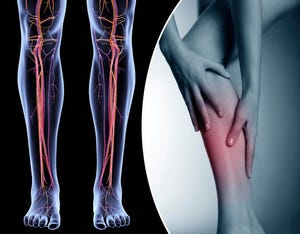




Compression Leggings: Choosing the Right mmHg for Your Legs
Compression leggings are full-leg garments that squeeze hardest at the ankle and ease off toward the hip, pushing blood and lymph fluid back up toward the heart instead of letting it pool around your feet. That single design detail — called graduated compression — is what separates a therapeutic pair from ordinary tight activewear, and it is the reason Discount Surgical Stockings stocks leggings by pressure rating rather than by trend. This guide covers what mmHg means, which level fits your situation, how to measure so the pair actually works, who should skip compression, and what the research does and does not prove.
Short answer: Most people who stand, sit, or travel all day do well in 15-20 mmHg compression leggings. People managing diagnosed swelling, veins, or lymphatic conditions usually need 20-30 mmHg compression leggings. Measure your ankle and calf in the morning, before swelling starts.

What are compression leggings, and how are they different from tight activewear?
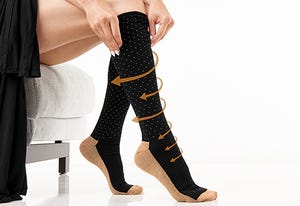
Compression leggings are calibrated medical garments that apply a measured, decreasing pressure from ankle to thigh. Regular leggings are sized for fit and coverage, so their pressure is whatever the fabric happens to deliver — often 5 to 12 mmHg, and often tightest at the widest part of the thigh, which is exactly backward. True graduated compression leggings are knitted so the strongest pressure sits at the narrowest part of the leg and tapers upward, working with the calf muscle pump every time you take a step.
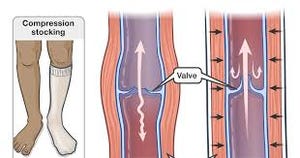
The difference matters because leg veins carry blood uphill. When the tiny one-way valves inside those veins stop closing fully, blood slides backward and settles in the lower leg. That backward flow is the mechanism behind chronic venous insufficiency, which affects roughly one in four U.S. adults, and behind the estimated 25 million Americans living with varicose veins. External pressure narrows the vein slightly so those damaged valves can meet again.

What does mmHg mean on a compression legging label?
mmHg stands for millimeters of mercury, the same unit used for blood pressure, and it tells you how much pressure the garment applies at the ankle. A label reading 20-30 mmHg means the ankle receives between 20 and 30 millimeters of mercury of pressure, tapering as the fabric climbs the leg. Higher is not better — it is simply different, and the wrong level either does nothing or becomes unwearable by lunchtime.
| Level | Label | Best suited for | Prescription needed? |
|---|---|---|---|
| 8-15 mmHg | Light | Tired legs, desk work, first-time wearers testing the sensation | No |
| 15-20 mmHg | Medium | Standing shifts, flights, mild ankle swelling, pregnancy, spider veins | No |
| 20-30 mmHg | Firm | Varicose veins, moderate edema, lipedema, post-sclerotherapy, POTS | Ask your provider first |
| 30-40 mmHg | Extra firm | Severe edema, lymphedema maintenance, post-thrombotic syndrome | Yes, in most cases |
| 40-50 mmHg | RX | Advanced venous disease under specialist supervision | Yes |
Anything at or above 20 mmHg is worth a conversation with your provider before you buy, because firm pressure is unsafe for a small group of people with arterial disease. If you are new to the category, start at 15-20 mmHg and move up only if your legs still feel heavy at the end of the day.
Who actually benefits from wearing compression leggings?
Compression leggings help anyone whose legs swell, ache, or feel heavy because blood and lymph fluid are not clearing efficiently. That covers far more people than the gym crowd the category is usually marketed to:

- People on their feet all shift — nurses, teachers, retail staff, line cooks, hair stylists, surgeons.
- Long-haul travelers. A Cochrane review of 12 randomized trials covering 2,918 passengers on flights over five hours found 3 symptomless clots among 2,637 stocking wearers versus 47 among those who wore nothing. This is where compression leggings for travel earn their keep.
- Anyone managing veins. Compression leggings for varicose veins will not erase existing veins, but they reduce the aching and swelling that make them miserable.
- People with lipedema or lymphedema. Full-leg coverage matters here, which is why lipedema leggings and lymphedema leggings are usually specified rather than knee-highs.
- Pregnancy and postpartum. Maternity compression leggings use a stretch panel over the belly with graduated pressure below.
- People with POTS and dysautonomia. Leg-plus-abdominal compression limits the blood pooling that triggers lightheadedness on standing.
- Athletes in recovery. More on the honest state of that evidence below.
That last group is where the category gets loudest, so it deserves a straight answer.
Do compression leggings really speed up muscle recovery?
The evidence for recovery is real but modest, and honest brands should say so. A meta-analysis of 12 studies found that compression garments produced a moderate effect on delayed onset muscle soreness (Hedges' g = 0.403), muscle strength (0.462), and power (0.487) in the 24 to 72 hours after damaging exercise. A newer 2026 review of endurance athletes found the direction favored compression but the confidence intervals were wide and the certainty was rated very low.
Read together, that means this: compression leggings reliably make sore legs feel better and may help you get back to full output sooner, but they are not a performance drug. If someone tells you a pair of leggings will add watts to your threshold, close the tab. When people ask do compression leggings work, the fair answer is that the circulation and swelling benefits are far better established than the performance ones.
How do compression leggings compare to socks, pantyhose, and shapewear?
Coverage is the deciding factor, not strength. All four garments can share the same mmHg rating, but they treat different territory.

| Garment | Coverage | Choose it when | Trade-off |
|---|---|---|---|
| Knee-high socks | Foot to below knee | Swelling stops at the calf; easiest to wear with shoes | No help above the knee |
| Thigh-highs | Foot to upper thigh | Thigh swelling, post-surgical use | Silicone bands can slip or pinch |
| Compression leggings | Toeless, ankle to waist | Full-leg support with your own socks and shoes | No foot compression |
| Compression pantyhose | Toe to waist | Foot and toe swelling included | Harder to put on; dressier look |
| Shapewear leggings | Varies | Silhouette only | Uncalibrated, often reverse-graduated |
The footless compression leggings format wins on practicality: you keep your own socks, your feet breathe, and the garment pairs with dresses, tunics, or shorts. Compression pantyhose remain the better call when your toes and forefoot swell too.
How do you measure for compression leggings so they actually work?
Measure your ankle, calf, thigh, and leg length first thing in the morning, before gravity has had a chance to add fluid. Compression is a pressure system, and pressure depends on circumference — a garment sized from an afternoon measurement will be a size too large and will deliver less pressure than the label promises.
- Ankle: measure the narrowest point, just above the ankle bone. This is the number the whole garment is calibrated around.
- Calf: measure the widest point of the calf.
- Thigh: measure roughly 3 inches below the crotch.
- Length: floor to the crease behind the knee, and floor to the crotch.
- Hips and waist: needed for the waistband on legging and pantyhose styles.
Two rules save most returns. Never size up for comfort, because a loose compression garment is just an expensive legging. And when you fall between sizes on the chart, check the ankle measurement first — that is the number the therapeutic effect depends on. If you are stuck, the Fit Finder tool at Discount Surgical Stockings walks you through it, and trained fitters take calls at 1.800.982.0939 rather than leaving you guessing between two size charts. Plus size compression leggings are sized by the same measurements, not by dress size.

How do you put compression leggings on without a wrestling match?
Turn the leg inside out down to the heel, work the fabric over the foot and ankle, then roll it up the leg in stages instead of yanking from the waistband. Firm pairs are meant to be difficult; that resistance is the compression doing its job.
- Put them on in the morning, before you stand around and swell.
- Wear rubber-textured donning gloves — they grip the knit and stop fingernails from tearing it.
- Dry skin helps. Lotion at night, not before donning.
- Smooth every wrinkle. A folded band of fabric creates a pressure point instead of even compression.
- Never roll the top down. A rolled cuff becomes a tourniquet.
How long should you wear compression leggings each day?
Put them on when you get up and take them off at bedtime, which is the standard schedule for daytime compression therapy. Lying flat removes the gravity problem that compression exists to solve, so overnight wear adds little for most people and is only appropriate when a clinician specifically prescribes night garments, which are made differently.
New wearers sometimes do better easing in over a week — a few hours the first day, building to a full day. Sharp pain, numbness, tingling, or toes that change color mean the pair is wrong, not that you need to tough it out.
When should you avoid compression leggings?
Skip compression and speak to a clinician first if you have peripheral arterial disease, an ankle-brachial index below 0.8, uncontrolled heart failure, an active skin infection, or advanced diabetic neuropathy. Compression assumes healthy arterial inflow; when arteries are already narrowed, squeezing the leg reduces the blood getting in rather than helping blood get out. Numbness from neuropathy is its own risk, because you may not feel a garment cutting in.

This is the safety conversation most fashion-side roundups leave out entirely, and it is the single most important paragraph in this guide.
How do you wash compression leggings so they keep working?
Wash them after every wear in cool water with a mild detergent, then air dry away from heat. Compression comes from elastane fibers under constant tension, and body oils, heat, and fabric softener all degrade those fibers faster than the knit itself wears out.
- Skip fabric softener and bleach entirely; both attack elastane.
- Use a mesh bag on a delicate machine cycle if hand washing is unrealistic.
- Never tumble dry on heat, and never drape them over a radiator.
- Own two pairs and alternate. The resting pair recovers its stretch.
- Replace every three to six months of daily wear, or sooner if they become easy to pull on.
That last point is the one people miss. A pair that slides on effortlessly has stopped delivering its rated pressure, whatever the label still says.
Can insurance help pay for compression leggings?
Sometimes, and it depends on the code and the diagnosis rather than the product name. Gradient compression garments are billed under HCPCS codes, and the 20-30 mmHg leggings sold at Discount Surgical Stockings carry code A6539. Medicare has historically covered compression garments mainly for open venous ulcers, though the Lymphedema Treatment Act expanded coverage for lymphedema compression garments starting in 2024.
- Ask your provider for a written order that names your diagnosis and the required mmHg.
- Keep the HCPCS code and an itemized receipt for reimbursement claims.
- HSA and FSA funds generally cover medical compression leggings when prescribed.
What should you look for when buying a pair?
Look for a stated mmHg range, a real size chart based on limb measurements, and a brand that publishes both. Anything advertising only "high compression" or "firm control" is shapewear wearing a lab coat.
- Stated pressure range in mmHg, not a 1-to-5 marketing scale.
- Graduated construction, strongest at the ankle.
- Opaque knit if you want them to pass as ordinary leggings — the reason high waisted compression leggings in black outsell every other style.
- A flat, non-rolling waistband, ideally with a control-top panel.
- Established medical brands such as Juzo, Jobst, Sigvaris, Therafirm, and mmHg.
- A returns policy that survives a fitting mistake, since the first pair is often a learning experience.
Discount Surgical Stockings prices the medical brands against the fashion ones deliberately — its 20-30 mmHg footless compression leggings list at $29.99, with free shipping over $25 and a price-match guarantee, so choosing a calibrated garment does not have to cost more than an uncalibrated one.

Frequently Asked Questions
What are compression leggings used for?
They are used to reduce leg swelling, ease aching and heaviness, support damaged vein valves, and limit fluid pooling during long periods of sitting or standing. Clinical uses include varicose veins, chronic venous insufficiency, lymphedema, lipedema, pregnancy swelling, post-surgical recovery, and POTS. Athletic use focuses on post-exercise recovery.
Do compression leggings work, or is it a placebo?
The circulation effects are measurable and well documented, especially for swelling and travel-related clot risk. The athletic performance claims are much weaker, and the best available meta-analyses report modest effects on soreness with wide uncertainty. Judge a pair on how your legs feel at 6pm, not on how fast you ran.
What mmHg should I choose for everyday wear?
15-20 mmHg suits most everyday wearers, including desk workers, travelers, and people with mild ankle swelling. Move to 20-30 mmHg for diagnosed vein disease, moderate edema, or lipedema, and check with a clinician before doing so.
Can you sleep in compression leggings?
Generally no, unless a clinician has prescribed night garments. Daytime compression is designed to counter gravity while you are upright; lying flat already does most of that work, and overnight wear risks pressure points from bunched fabric.
Do compression leggings help with cellulite or weight loss?
No. They can temporarily smooth the appearance of the skin while worn, and reducing fluid retention can make legs look and feel less puffy, but there is no evidence that compression reduces fat or changes cellulite structure. Any brand promising fat loss from a garment is selling a story.
Why do my legs ache or itch after wearing compression?
The usual causes are a wrong size, a rolled waistband, dry skin, or a pressure level too high for your legs. Aching that appears after wearing compression is worth investigating rather than ignoring, since it can also signal that arterial circulation should be checked before you continue.
Are compression leggings safe during pregnancy?
Yes for most pregnancies, and 15-20 mmHg maternity styles are commonly recommended for swelling and vein prevention. Choose a design with a stretch abdominal panel rather than a firm control top, and confirm with your provider if you have any pregnancy complications.
How many pairs do I need?
Two at minimum for daily wear. One is being worn while the other is drying, and rotating pairs extends the working life of both. Plan on replacing them every three to six months.
This article is educational and does not replace medical advice. Talk with a healthcare provider before starting compression therapy at 20 mmHg or above, particularly if you have arterial disease, diabetes, heart failure, or any skin condition affecting your legs.


